
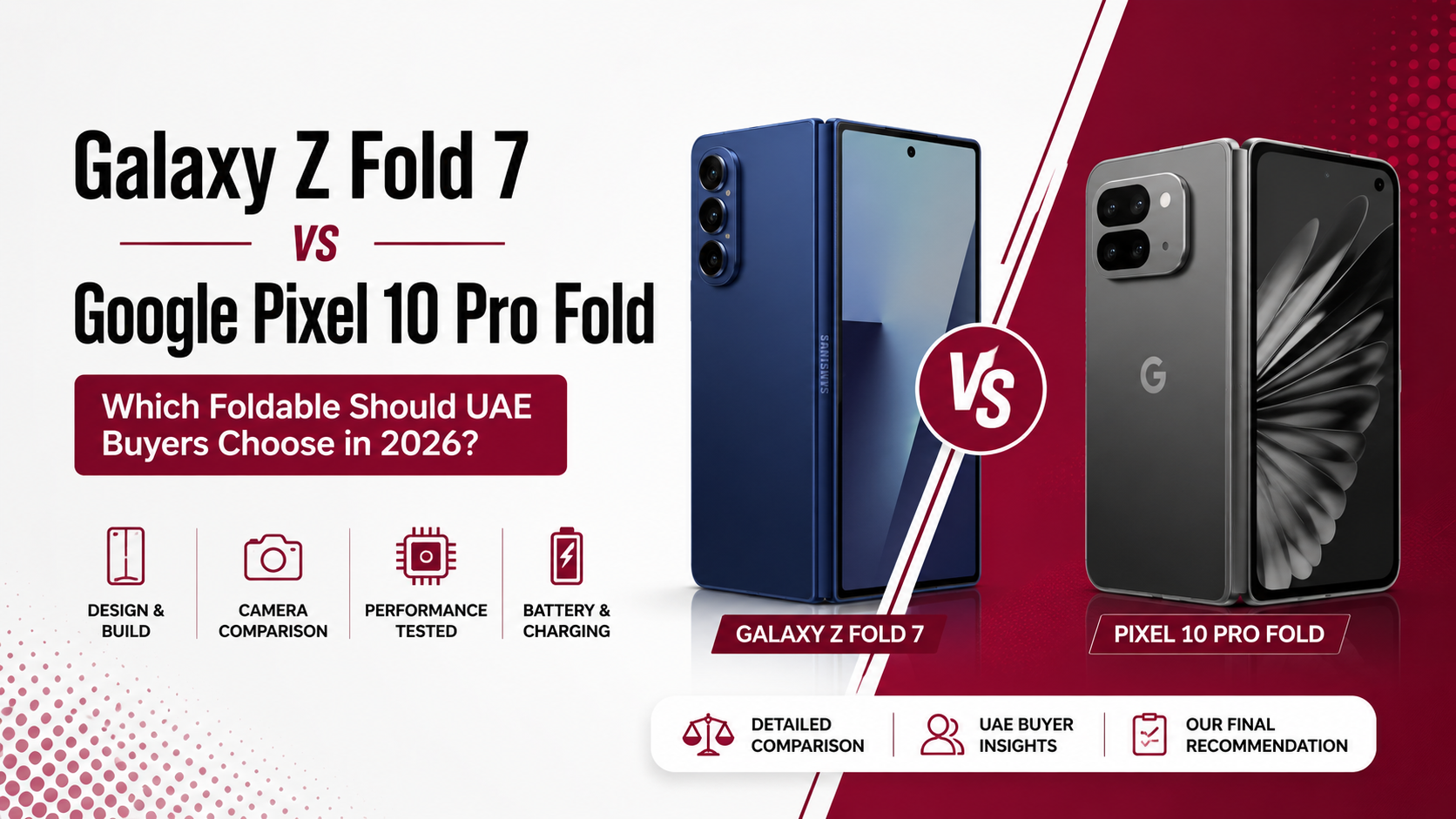
The foldable smartphone market in the UAE has reached a fascinating maturity peak. Walk into any electronics boutique in downtown Dubai or browse premium tech retailers across Abu Dhabi, and you’ll notice that flexible screens are no longer experimental novelties—they are the definitive status symbol for power users, executives, and multi-tasking creators.
Two absolute titans dominate the premium workspace: the Samsung Galaxy Z Fold 7 and the Google Pixel 10 Pro Fold. Both devices have hit the shelves with cutting-edge engineering, but they target drastically different user philosophies.
If you are looking to make a premium upgrade this year, here is a detailed, real-world comparison to help you decide which device deserves a spot in your pocket.
1. Design & Form Factor: Sleek Precision vs. Passport Portability
Samsung completely reimagined its engineering framework for this generation. The Galaxy Z Fold 7 sheds significant mass, dropping down to a remarkably light 215 grams and measuring a razor-thin 8.9mm when folded. It features premium Advanced Armor Aluminum frames and flat matte edges that give it a highly streamlined, modern aesthetic.
+----------------------+- - - - - - - - - - - - - - - - - - - - - - - -+| | || | || | || Samsung Z Fold 7 | Google Pixel 10 Pro Fold || · 215g (Lighter) | · 258g (Heavier) || · 8.9mm Folded | · 10.8mm Folded || · 200MP Main Cam | · 5,015mAh Battery || | || | |+----------------------+- - - - - - - - - - - - - - - - - - - - - - - -+
Google’s Pixel 10 Pro Fold leans into a slightly wider, passport-style dimension layout. While it opens up to a beautifully immersive 8.0-inch internal display, it remains noticeably bulkier than the Samsung, coming in at 258 grams and 10.8mm when closed.
- The Verdict on Design: If you prioritize a lightweight device that won't weigh down the pocket of a tailored suit, Samsung takes a clear victory. However, if you prefer a wider, more natural-feeling 6.4-inch outer cover screen for everyday typing, Google’s layout feels less cramped.
2. Display Experience & Brightness
Both foldables treat your eyes to gorgeous 120Hz refresh rates and expansive 8-inch folding internal real estate.
- Samsung Galaxy Z Fold 7: Features a bright Dynamic LTPO AMOLED 2X panel pulling up to 2,600 nits of peak brightness. Samsung’s new display support incorporates an upgraded titanium plate layer underneath to flatten out the center crease more effectively than ever.
- Google Pixel 10 Pro Fold: Employs an ultra-premium Super Actua Flex display that pushes a blinding 3,000 nits of peak brightness. This makes it marginally easier to view spreadsheets or read text under direct midday desert sunlight when working outdoors in the UAE.
3. Raw Performance: Snapdragon Elite vs. Tensor G5
Under the hood, the two devices diverge on processing power:
- Galaxy Z Fold 7: Packs the beastly Snapdragon 8 Elite for Galaxy. This chip is an absolute processing juggernaut, offering peerless thermal management and fluid graphics rendering. For heavy gaming or launching multiple windows simultaneously via Samsung DeX, it's virtually flawless.
- Pixel 10 Pro Fold: Runs on Google’s custom 3nm Tensor G5 chip paired with a massive 16GB of RAM. While its raw computing benchmarks trail slightly behind the Snapdragon Elite, it handles everyday multitasking gracefully. Where it shines is in dedicated, latency-free on-device Gemini AI processing.
4. Camera Performance: Megapixels vs. Software Magic
The approach to mobile photography represents two entirely different schools of thought:
Sony and other brands favor natural tones, but these giants lean heavily into specialized high-end computational power. Samsung brings sheer hardware force by slapping its flagship 200MP main camera sensor directly onto the rear chassis of the Fold 7. It captures staggering levels of crisp detail and allows for substantial cropping capabilities.
Google sticks with a proven 48MP main sensor, 10.5MP ultrawide, and a 10.8MP 5x optical telephoto lens. While the hardware specs look modest on paper, Google’s computational algorithms deliver industry-leading skin tones, brilliant night cityscapes, and unique editing tools like Best Take and Zoom Enhance.
5. Battery and Charging Speeds
Battery life on large inner displays is always a crucial metric:
- Samsung Galaxy Z Fold 7: Houses a dual 4,400mAh battery cell. Charging speeds are conservatively capped at 25W wired.
- Google Pixel 10 Pro Fold: Gains a substantial lead here with a larger 5,015mAh battery. It supports 30W wired charging along with premium Qi2 magnetic wireless charging functionality via its built-in "Pixelsnap" magnet array.
Summary Table: Quick Specs Comparison
Feature | Samsung Galaxy Z Fold 7 | Google Pixel 10 Pro Fold |
Weight | 215 grams (Sleeker) | 258 grams |
Processor | Snapdragon 8 Elite | Google Tensor G5 |
RAM | 12GB / 16GB | 16GB LPDDR5X |
Main Camera | 200 MP (f/1.7) | 48 MP (f/1.7) |
Battery Size | 4,400 mAh | 5,015 mAh |
Wireless Tech | 15W Wireless | 15W Qi2 Magnetic |
Water/Dust | IP48 | IP68 (Superior Dust/Water) |
The Verdict: Which One Should You Buy?
Choosing between these two premium flagships comes down to what you value most in a daily workspace machine:
Choose the Samsung Galaxy Z Fold 7 if: You want the absolute thinnest, lightest book-style foldable available. Its processing performance is unmatched, it folds nearly flat, and the 200MP sensor yields incredible raw detail.
Choose the Google Pixel 10 Pro Fold if: You prefer a wider cover screen that behaves like a standard phone when closed, value superior outdoor screen legibility (3,000 nits), want a larger battery with magnetic Qi2 charging convenience, and favor Google’s signature clean AI software tools.